
PGT Testing and Surrogacy in Mexico: Why Many Intended Parents Choose Genetic Embryo Screening
As fertility treatments continue to evolve, more Intended Parents pursuing surrogacy in Mexico are exploring advanced technologies that may help improve embryo selection before pregnancy begins.
One of the most commonly requested options during IVF preparation is Preimplantation Genetic Testing (PGT), a process designed to evaluate embryo health before transfer.
For many families, PGT can provide additional reassurance, support more informed embryo transfer decisions, and help optimize the surrogacy process from the very beginning. At Atlas Surrogacy, we work closely with IVF clinics and fertility specialists in Mexico to help Intended Parents understand the role of genetic embryo testing and whether it may be appropriate for their journey.
What Is PGT?
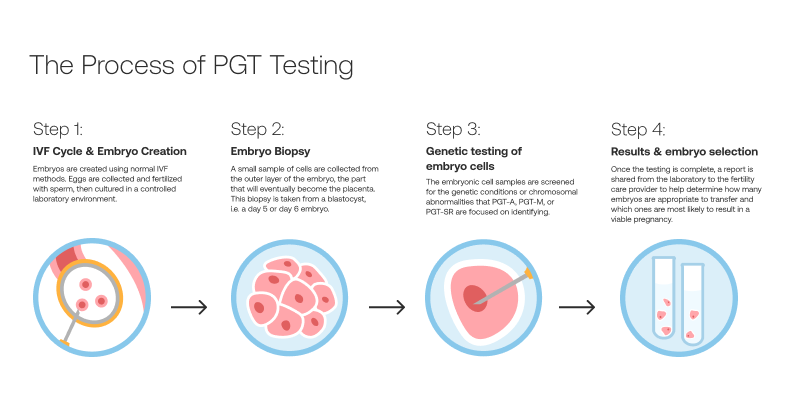
Preimplantation Genetic Testing (PGT) is a genetic screening process performed during IVF treatment. After embryos are created in the laboratory and develop to the blastocyst stage, fertility specialists carefully biopsy a very small number of cells from each embryo. These samples are then analyzed by specialized genetic laboratories.
The embryos remain safely frozen while the testing process is completed. The purpose of PGT is to provide additional information regarding embryo chromosomal health before transfer.
Types of PGT Available
PGT-A: evaluates whether embryos have the correct number of chromosomes. This is currently the most commonly used form of PGT because chromosomal abnormalities are frequently associated with failed implantation, miscarriage, or unsuccessful IVF cycles.
PGT-M: may be recommended when Intended Parents carry a known inherited genetic condition. This testing can help reduce the risk of passing specific hereditary diseases to the child.
PGT-SR: is generally used in more specific situations involving structural chromosomal rearrangements that could affect embryo development.
Why Do Intended Parents Choose PGT in Mexico?
Many Intended Parents pursuing surrogacy in Mexico choose PGT testing because it may help:
Identify embryos with stronger implantation potential.
Reduce the likelihood of transferring embryos with chromosomal abnormalities.
Improve efficiency when multiple embryos are available.
Lower the risk of miscarriage associated with chromosomal issues.
Support single embryo transfer approaches.
Provide additional confidence during the IVF and surrogacy process.
Although no fertility treatment can guarantee a successful pregnancy, PGT can help fertility specialists make more informed embryo selection decisions.

Can Intended Parents Select the Gender?
Because PGT analyzes embryo chromosomes, the testing process can also identify the embryo’s sex chromosomes. This means Intended Parents may know the gender of the embryos before transfer. At Atlas Surrogacy, our team can explain which options may be available within the context of your specific journey in Mexico.
Is PGT Always Necessary?
Not necessarily. The decision to pursue PGT depends on many different factors, including:
Maternal age.
Previous IVF attempts.
Number of available embryos.
Family medical history.
Previous pregnancy losses.
Genetic concerns.
Personal preferences.
Some Intended Parents prefer additional embryo information before transfer, while others choose not to pursue testing. Every case is unique, and fertility specialists will typically provide individualized medical recommendations based on each situation.
Why PGT Is Often Considered in Surrogacy Cases?
Surrogacy journeys involve significant emotional commitment, legal coordination, medical preparation, and financial investment. For this reason, many Intended Parents consider embryo screening before transfer in order to optimize embryo selection whenever possible.
When chromosomally normal embryos are available, this may help support a smoother and more efficient process overall.
How Atlas Surrogacy Supports Intended Parents?
Our team assists Intended Parents with:
IVF clinic coordination in Mexico.
Guidance regarding PGT and embryo preparation.
Surrogacy program coordination.
International embryo transportation.
Legal and medical coordination.
Multilingual communication support.
Ongoing case management throughout the journey.
We understand that every family’s priorities, concerns, and goals are different. Our objective is always to provide transparent guidance and personalized support tailored to each Intended Parent’s situation.
Conclusion.
PGT testing has become an important part of modern fertility treatment for many Intended Parents pursuing surrogacy in Mexico. Whether you are just beginning to explore surrogacy or preparing for embryo transfer, understanding your available options is an important step toward building your family.
If you would like to learn more about IVF, PGT testing, or surrogacy in Mexico, the Atlas Surrogacy team will be happy to guide you through the next steps.


Comments